
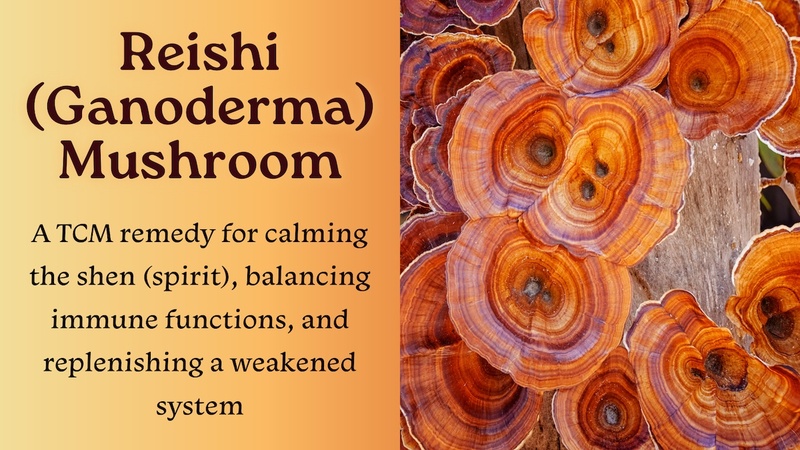
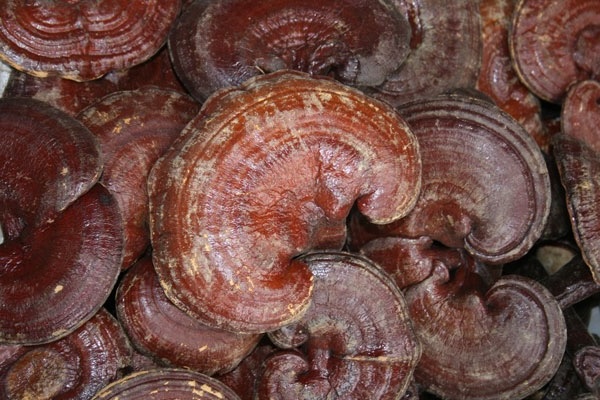
Reishi, also known as ganoderma, is one of our valuable medicinal mushrooms. It’s a woody one, not a fleshy one. I discovered this first hand when I bought some dried reishi mushrooms from a Chinese herb shop in Las Vegas. They were hard, and I couldn’t break them in smaller pieces or even cut them with a knife. They’re not that hard when fresh, so it would be better to get the dried ones in a powder form or at least broken into small pieces.
I’ve previously written about two other medicinal fungi, maitake and cordyceps. Like these two fungi, reishi has numerous health benefits. It's a tonic for the nervous system, helps balance and improve immune functions, and is a tonic for the lungs and liver. It has a long history of use in China (over 2,000 years of recorded history), where it is called Ling Zhi, which means “spiritual mushroom.”
The name reishi comes from the Japanese, who began to research it in the 1980s. Western researchers started studying the fungus in the early 1990s. Reishi has consistently impressed the biomedical community when studied as a source for potential hypertension, diabetes, hepatitis, cancer, and AIDS drugs. We’ll talk about all the benefits of reishi, but let’s start with its benefits for the nervous system.
Shen and Heart Tonic
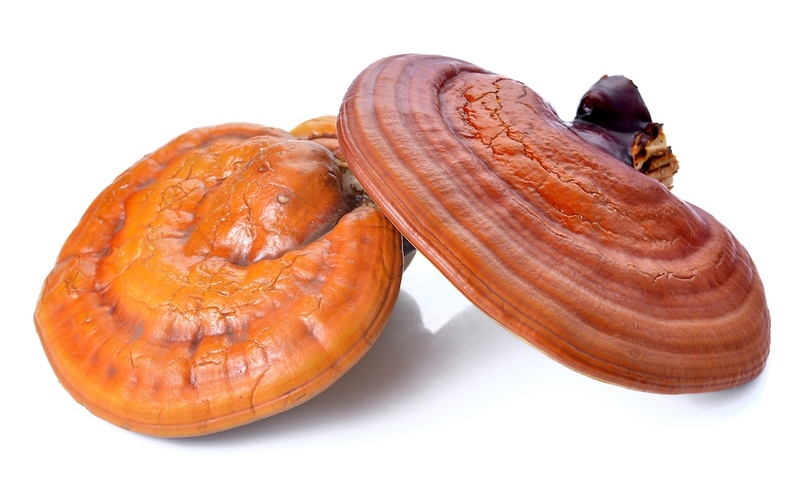 The Chinese say that reishi nourishes the heart and calms the shen. Shen is the Chinese concept of spirit, encompassing aspects of both mind and emotion. Remedies that calm the shen reduce nervousness and anxiety and benefit the heart by helping to regulate the nervous system more than the heart muscle. Disturbances of the shen not only produce anxiety, but they can also cause insomnia, bad dreams, poor concentration and memory, dizziness, and moodiness.
Reishi can help to calm the nervous system, promote better sleep, and reduce symptoms of stress. It calms the sympathetic nervous system and can help to overcome nervous exhaustion, adrenal fatigue, and feeling burned out. It acts both as an adaptogen and as a relaxing nervine. It gently and cumulatively tones the parasympathetic side of the nervous system (the part of the nervous system that allows us to rest, relax, eat, digest, sleep, and dream) helps reduce the output of stress hormones from the adrenal glands.
Reishi also benefits the physical heart. It can help reduce high blood pressure, especially when it is associated with stress. It can also be beneficial for heart palpitations and arrhythmia. Research also suggests it can reduce high cholesterol and has anti-inflammatory properties that reduce arterial inflammation, the root cause of plaque formation.
Immune Modulator
 Reishi is an immune modulator, which means it is helpful for overcoming immune deficiency to help the body fight illness and can also help calm or regulate immune activity to help autoimmune disorders. It contains compounds that may inhibit tumor formation and the metastases of cancer cells as well as compounds that block tumor growth. It is also helpful for alleviating the side effects of chemotherapy, so it can be used along with conventional cancer therapies.
Unlike many other immune-enhancing remedies, however, reishi is also beneficial for reducing excessive immune reactions in autoimmune disorders. It may be helpful in conditions like lupus, rheumatoid arthritis, Crohn’s disease, and ankylosing spondylitis. It has also been used in Sjogren’s syndrome.
Other Uses for Reishi
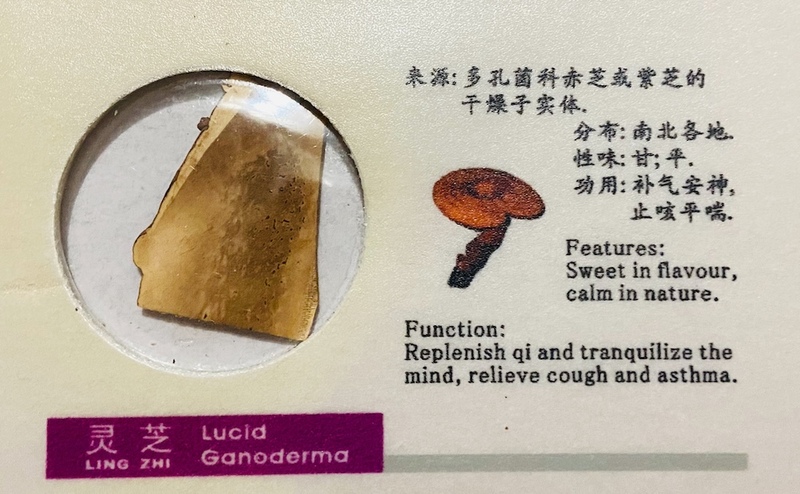 Like cordyceps, reishi also acts as a tonic for the lungs. It can help ease chronic cough, asthma, and bronchitis. It eases coughing caused by cold, wheezing, loss of sleep due to dyspnea (shortness of breath).
It also acts as a tonic to the liver. It can help to protect the liver against damage caused by viral, drug, or environmental liver toxins. It has also been used with vitamin C for treating hepatitis B and C.
Reishi is also used to treat deficiencies of both blood and qi. It is helpful as a tonic for people who are pale and weak, strengthening their system and improving overall health.
Using Reishi
The Chinese use reishi in decoction form, with the dose being 3-15 grams a day (as a decoction). You can make a decoction using two teaspoons of the powdered mushroom in 12 ounces of water. Simmer this for one hour. You can drink 2-4 cups a day.
The Chinese also use reishi in powdered form. The dose is 1.5 to 3 grams a day, which would be approximately 3 to 6 capsules a day or 1-2 capsules three times daily.
Reishi is also used in tincture form. Some of its compounds are alcohol-soluble, but some are not. The proper way to make a tincture from reishi is to do a dual extraction in both water and alcohol (separately). You can follow instructions on this process, or you can purchase a commercial tincture. The dose for the tincture is ½-1 teaspoon three times daily.
In nature, reishi grows at the base or on stumps of deciduous trees, but most of it is cultivated on logs, sawdust, or woodchips. You can buy kits and try growing your own if you’re interested in trying to do that.
Selected References
- Chinese Medicinal Herbology and Pharmacology by John K. Chen and Tina T. Chen
- The Earthwise Herbal by Matthew Wood
- Reishi Mushroom: Fight Disease, Boost Immunity & Improve Liver Detox
- 6 Benefits of Reishi Mushroom
- How to Make a Reishi Mushroom Tincture in 11 Simple Steps
- How to Make Reishi Mushroom Dual Extract Tincture (video)
Steven's Articles
May
-

-
The Health Benefits of Cruciferous Root Vegetables
Radishes, turnips, and rutabagas aid detoxification,…
-

-
Watercress, Garden Cress, and Pennycress
Three valuable overlooked cruciferous vegetables…
-

-
Cruciferous Vegetables
The Health Benefits of Broccoli, Cauliflower,…
April
-

-
Kale Chips
A fun way to eat your leafy, green vegetables
-

-
Ligustrum (Glossy Privet Fruits)
Ligustrum is a liver and kidney tonic that strengthens…
-

-
Bupleurum
An important Chinese herb for supporting the liver…
March
-

-
N-Acetylcysteine
An amino acid-based supplement for liver, eye,…
-

-
The Effects of Tryptophan on Health and Mood
L-Tryptophan and 5-HTP are important precursors…
-

-
The Exotic Scent of Ylang Ylang
Promoting sensual feelings, relaxing the nerves,…
-

-
The Uplifting Fragrance of Jasmine
Jasmine lifts depression, aids self-confidence,…
February
-

-
Reishi (Ganoderma) Mushroom
A TCM remedy for calming the shen (spirit), balancing…
-

-
Eucommia Bark
A superior tonic that promotes kidney, structural,…
January
-

-
Goldenthread, Phellodendron, and Yellow Root
Three herbal remedies containing the infection-fighting…
-

-
Teasel
A traditional herb for healing bones and joints…
-

-
Barberry and Healthy Personal Boundaries
A thorny shrub for fighting infections and supporting…
Steven Horne is an herbalist and healer who focuses on teaching others how they can start building health and stop treating disease.
-
-
The Health Benefits of Cruciferous Root Vegetables
Radishes, turnips, and rutabagas aid detoxification,… | May 25, 2026
-
-
-
Watercress, Garden Cress, and Pennycress
Three valuable overlooked cruciferous vegetables with… | May 18, 2026
-
-
-
Cruciferous Vegetables
The Health Benefits of Broccoli, Cauliflower, Kale,… | May 6, 2026
-
-
-
Kale Chips
A fun way to eat your leafy, green vegetables | April 30, 2026
-
-
-
Ligustrum (Glossy Privet Fruits)
Ligustrum is a liver and kidney tonic that strengthens… | April 28, 2026
-
- More Articles
- Using Foods as MedicinesMay 2026Member webinar
- The Medicinal Kit in Your Kitchen CabinetJune 30, 2026 6:00 pm MTMember webinar
- Herbs & HomeopathyJuly 28, 2026 6:00 pm MTMember webinar
- The Amazing Benefits of AdaptogensAugust 25, 2026 6:00 pm MTMember webinar
- Silicon: The Overlooked NutrientSeptember 29, 2026 6:00 pm MTMember webinar
- More Webinars & Classes
Useful Links
Contact Us
Email: treelite@treelite.com
Steven Horne Creations
PO Box 1172
St. George, UT 84771
2026 © Steven Horne Creations, LLC. All Rights Reserved.