
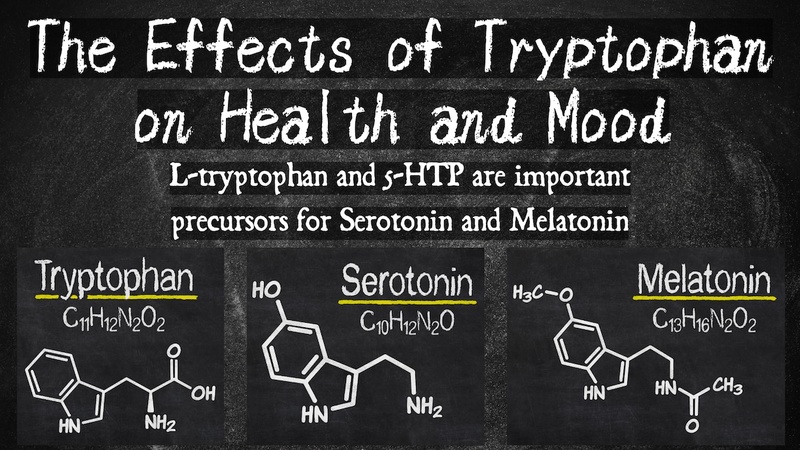
Back in the late 1980s, I learned about the benefits of tryptophan. Tryptophan is an essential amino acid and a precursor to the production of serotonin, the neurotransmitter involved in mood regulation, sleep, and appetite regulation. In turn, serotonin is the precursor to melatonin, the pineal hormone that helps us sleep. Because the amount of serotonin produced in the brain is influenced by the amount of tryptophan that crosses the blood-brain barrier, taking L-tryptophan as a supplement naturally increases serotonin and also aids in the production of melatonin. This aids both mood and sleep.
Tryptophan is used in many other body processes besides mood and sleep regulation. It is used to create pincolinic acid, which helps with the absorption and transportation of zinc. It plays a role in reducing carbohydrate cravings and may also increase tolerance to pain.
I should also mention that serotonin is also produced in the intestinal tract by gut bacteria acting on tryptophan. In fact, more serotonin is produced in the gut than in the brain, making tryptophan an essential part of the gut-brain axis. It is one mechanism by which a healthy gut helps support a healthy mood.
The L-Tryptophan Ban
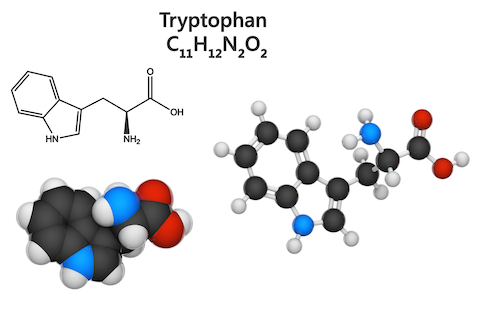 Shortly after I learned about the benefits l-tryptophan it was removed from the marketplace. The FDA did this in response to a contaminated batch of the supplement, which caused an epidemic of Eosinophilia-Myalgia Syndrome (EMS) in 1989. Even though the problem was linked to one manufacturer, the FDA recalled all tryptophan supplements and banned them.
While I hold no evidence, the timing of this ban felt suspect. It might be that the FDA was doing due diligence in ensuring better manufacturing and quality control to prevent an epidemic, but the ban came around the same time, 1988, that the first selective serotonin reuptake inhibitor (SSRI) appeared in the marketplace—fluoxetine (Prozac).
L-tryptophan supplements are a natural alternative to SSRIs. They help to increase levels of serotonin in the brain and can ease depression and anxiety and aid sleep. Fortunately, whatever issues the FDA had with them are gone because L-tryptophan can again be purchased as a nutritional supplement.
Understanding L-Tryptophan, 5-HTP, and Serotonin
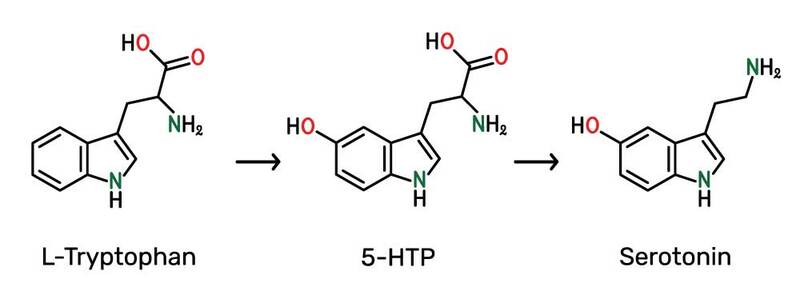 In the brain, tryptophan isn't directly converted to serotonin. It is first converted to 5-hydroxy-tryptophan (5-HTP), which is also sold as a nutritional supplement. 5-HTP was discovered in the seeds of a woody shrub in Africa, Griffonia simplicifolia, and has been used as an alternative to tryptophan supplements.
The serotonin-producing neurons are located in the raphe nuclei, a group of neurons found in the midline of the brain stem. They project upwards into the brain and downwards into the spinal column, forming a sort of interface between spinal nerves and the brain.
The activity of these neurons and the serotonin they release is involved in self-esteem and willpower. Low activity of these neurons results in feeling discouraged and depressed. Low activity also makes it difficult to control impulses and finish tasks. It can also cause irritability. Normal activity in these neurons promotes feelings of self-worth and the ability to delay gratification, that is, to create and act on well-formed plans. Excessive activity of these neurons, however, can lead to feelings of aggression, hostility, and violence. These problems are some of the potential side effects of taking SSRIs and other drugs that artificially increase the activity of serotonin.
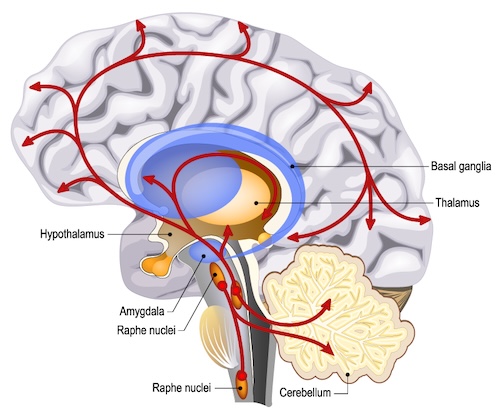 Because of their location in the brainstem, the serotonin-producing neurons help to link the body and the mind. They have a regular, steady level of activity during the day, which slows down when we sleep, and shuts down when we dream. Thus, the dream state involves a disconnection of the mind from the body. LSD causes hallucinations (which are a type of waking dream) because it binds to serotonin receptors and inhibits them. Two other hallucinogens, ergot fungus and psilocybin, also down-regulate serotonin neurons.
This suggests that the serotonin neurons have a grounding effect. When we "daydream," we are disconnecting our minds from the practical world and the needs of the body. When we are grounded, our thought processes are more linked to the reality of the body and the physical world. The body-centered psychologist, Alexander Lowen, discussed a related idea in one of his books. He said that when schizophrenics are asked to draw a picture of themselves, their head is typically not connected to the body, and the location of the disconnect is at the top of the neck, where these neurons are located.
Depression, Posture, and Meditation
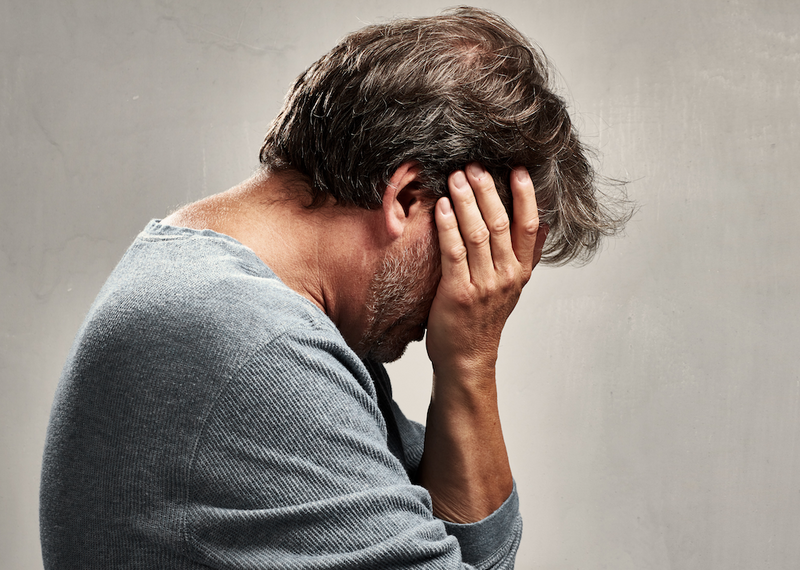 One of the interesting things about depression is that it causes us to slump forward. Our head bows down, which is a sign of submission rather than assertion. The serotonin neurons help us assert our worth and pursue the things we want and need. The slumped posture and bowed neck are signs that a person has given up. In contrast, when a person achieves something worthwhile, they throw their head backwards and raise their arms in a posture that says, "I'm a winner." I've read that adopting that posture has been shown to increase the activity of serotonin in the brain.
I've also read that meditation is reported to improve serotonin levels. To meditate, one has to relax the body and quiet the mind. This increases awareness and produces a grounded focus. When meditating, one is not daydreaming, with their mind up in the clouds and disconnected from reality. Instead, a meditating person is more aware of their body and the world around them, but they are passively observing it, not caught up in it. Thus, meditation is both grounding and mind-expanding at the same time. It's also interesting that some essential oils like frankincense and myrrh, which have been used to aid meditation, also lift depression.
 I mention all this because I want to put the use of supplements like tryptophan or 5-HTP into proper perspective. While taking them might ease depression or depression-related anxiety, they aren’t the ultimate solution. The bottom line solution is connecting with your body and your physical and emotional needs, inwardly asserting your self-worth and your rights to meet those needs, and then taking action to get those needs met. We call this learning to “stand up for yourself,” which also implies that you need to stop slumping forward and stand erect to activate serotonin. I've actually tried straightening my posture when I'm feeling "down" and have experienced how it helps firsthand.
L-Tryptophan, Melatonin, and Sleep
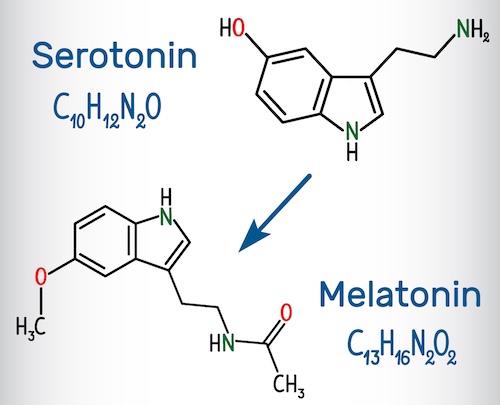 When light stops coming into the eyes, the pineal gland starts converting serotonin to melatonin. So, if you want to use L-tryptophan or 5-HTP to help you sleep better, you should take it about an hour before bedtime. Then, don’t watch TV, sit in front of the computer, or stare at your cell phone. These light-emitting sources inhibit the production of melatonin. Dim the lights and make sure your room is completely dark when you’re ready to go to sleep. It helps to wear a sleep mask. When I started doing this, I fell asleep much more quickly and was able to sleep better.
I also think it’s better to take a sleep formula that contains tryptophan or 5-HTP with other things that can help you relax and go to sleep, especially sedative herbs like hops, valerian, passion flower, and skullcap. Nutraceutical ingredients to look for in a good sleep formula (besides 5-HTP) are l-threonine, GABA, and magnesium.
Melatonin is also available as a supplement and has a number of potential benefits, the primary one being better sleep. I think it's OK to help you get started sleeping better or to aid getting to sleep because of jet lag, but the goal should be to get your body making its own melatonin.
Gut Health and Appetite Regulation
More serotonin is produced in your gut than in your brain, so the gut actually uses more tryptophan than your brain does. The conversion here is made by friendly microbes in your gut. So, a healthy microbiome will actually improve your mood. L-tryptophan also reduces carbohydrate cravings, so you don’t want to eat as many sugary and starchy foods. It’s also important to note that creating serotonin in your brain uses vitamins that are also used in producing energy from sugars. When you eat refined carbohydrates, you’re depleting stores of these vitamins, which inhibits serotonin production and influences mood. So tryptophan may help restore balance in the gut-brain connection.
L-tryptophan has other potential benefits as a nutritional supplement. It may help reduce irritability and aggression. Serotonin plays a role in modulating pain, so it may have some benefit, especially for chronic pain. However, I have not personally seen tryptophan or 5-HTP helpful for pain management. L-tryptophan and 5-HTP have been used to reduce tremors in Parkinson's, and they may be helpful as part of a program for schizophrenia, overcoming suicidal thoughts, and reducing mania.
Using L-Tryptophan or 5-HTP
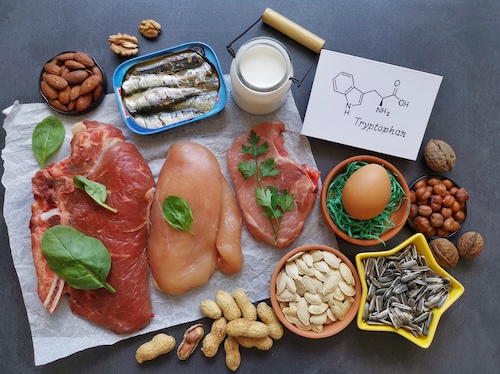 Tryptophan is found naturally in many foods, including turkey, chicken, beef, brown rice, nuts, fish, milk, eggs, cheese, and even some fruit and vegetables. So, most people can easily get adequate amounts of this essential amino acid from their diet. Supplementation may be helpful if you’re suffering from depression or anxiety and have cravings for carbohydrates, but as already noted, this should be accompanied by other diet and lifestyle changes.
It’s possible to transition from SSRIs to 5-HTP or l-tryptophan supplements, but this needs to be done very gradually. Abruptly discontinuing SSRIs is very dangerous. A friend of mine, Anne Blake Tracy, talks about the dangers of SSRIs and on her site and has a page on ways to transition off of them.
A therapeutic dose of L-tryptophan would typically range from 1,000 to 3,000 milligrams a day. Most of the products I see online are 500 mg or 1,000 mg per capsule. You could start with 500 to 1,000 mg a day and see how you feel, then adjust the dose upwards if you feel you need more. For 5-HTP, the dose is around 50 to 200 mg per day. I think both supplements would be better as part of a formula targeted either for mood (serotonin) or sleep (melatonin), along with other herbs and nutrients that would work synergistically with them.
Steven's Articles
-

-
Cruciferous Vegetables
The Health Benefits of Broccoli, Cauliflower,…
April
-

-
Kale Chips
A fun way to eat your leafy, green vegetables
-

-
Ligustrum (Glossy Privet Fruits)
Ligustrum is a liver and kidney tonic that strengthens…
-

-
Bupleurum
An important Chinese herb for supporting the liver…
March
-

-
N-Acetylcysteine
An amino acid-based supplement for liver, eye,…
-

-
The Effects of Tryptophan on Health and Mood
L-Tryptophan and 5-HTP are important precursors…
-

-
The Exotic Scent of Ylang Ylang
Promoting sensual feelings, relaxing the nerves,…
-

-
The Uplifting Fragrance of Jasmine
Jasmine lifts depression, aids self-confidence,…
February
-

-
Reishi (Ganoderma) Mushroom
A TCM remedy for calming the shen (spirit), balancing…
-

-
Eucommia Bark
A superior tonic that promotes kidney, structural,…
January
-

-
Goldenthread, Phellodendron, and Yellow Root
Three herbal remedies containing the infection-fighting…
-

-
Teasel
A traditional herb for healing bones and joints…
-

-
Barberry and Healthy Personal Boundaries
A thorny shrub for fighting infections and supporting…
December
-

-
The Evidence for Berberine
A yellow alkaloid found in traditional infection-fighting…
-

-
The Sensible Use of Caffeinated Herbs
Kola nuts, guarana, and yerba mate and other herbs…
Steven Horne is an herbalist and healer who focuses on teaching others how they can start building health and stop treating disease.
-
-
Cruciferous Vegetables
The Health Benefits of Broccoli, Cauliflower, Kale,… | May 6, 2026
-
-
-
Kale Chips
A fun way to eat your leafy, green vegetables | April 30, 2026
-
-
-
Ligustrum (Glossy Privet Fruits)
Ligustrum is a liver and kidney tonic that strengthens… | April 28, 2026
-
-
-
Bupleurum
An important Chinese herb for supporting the liver… | April 6, 2026
-
-
-
N-Acetylcysteine
An amino acid-based supplement for liver, eye, lung,… | March 31, 2026
-
- More Articles
- The Critical Role of Sulfur in HealthApril 2026Member webinar
- Botany for HerbalistsMay 5, 2026 6:00 pm MTMember class
- Using Foods as MedicinesMay 26, 2026 6:00 pm MTMember webinar
- The Medicinal Kit in Your Kitchen CabinetJune 30, 2026 6:00 pm MTMember webinar
- Herbs & HomeopathyJuly 28, 2026 6:00 pm MTMember webinar
- More Webinars & Classes
Useful Links
Contact Us
Email: treelite@treelite.com
Steven Horne Creations
PO Box 1172
St. George, UT 84771
2026 © Steven Horne Creations, LLC. All Rights Reserved.