
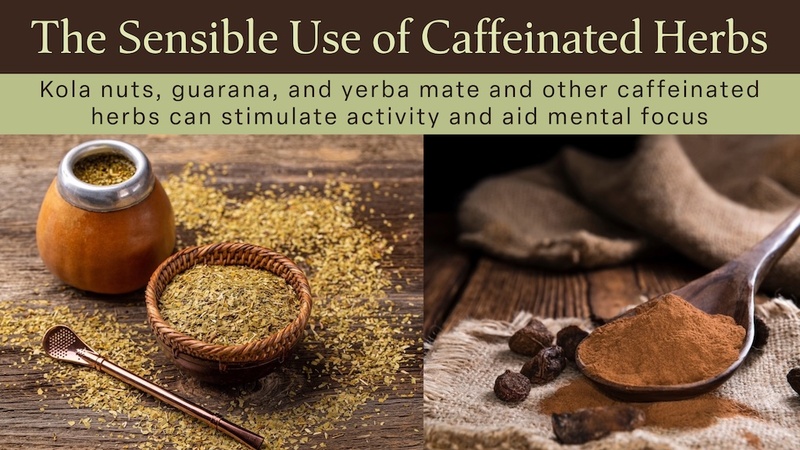
I find it interesting that people all over the world drink beverages made with caffeinated herbs. The desire to have more energy is pretty universal, and people tend to enjoy the feeling of stimulation these herbs bring. I know that I do. And, all these herbs are natural and appear to have other health benefits when used with moderation and as whole substances. I was raised with the idea that stimulants are bad, but I now believe that there is nothing wrong with herbs that act as mild stimulants, and they can be good medicines when used sensibly.
I like to refer to caffeinated herbs (tea, coffee, kola nuts, guarana, and yerba mate), and other remedies like coca leaf, Chinese ephedra, and Scotch broom as stimulating nervines because they have the opposite effect on the nervous system as nervines. Traditional nervines (or what I sometimes call relaxing nervines) are remedies that induce a calm or relaxed feeling by effecting the neurotransmitter systems of the body. They do this by inhibiting catecholamine neurotransmitters (epinephrine, norepinephrine, serotonin, and dopamine) and/or stimulating the parasympathetic nervous system (vagus nerve) and enhancing the relaxing neurotransmitters like GABA or endorphins.
Stimulant nervines also effect the neurotransmitter systems of the body, but unlike relaxing nervines they enhance the catecholamine neurotransmitters and/or relax the parasympathetic nervous system and inhibit neurotransmitters like GABA or endorphins. Using stimulating nervines appropriately is no more harmful than regularly using relaxing nervines like hops, valerian, scullcap, or passion flower to help you relax and go to sleep.

Part of the problem comes from trying to equate the effect of an isolated compound in a plant, like caffeine, with the effect of a whole herb that contains it. You're not going to get the antioxidant benefits that many of these caffeinated herbs provide from an energy drink that contains isolated caffeine. Likewise, snorting a line of cocaine is very different than using coca leaf as a whole herb. Coca leaves contain numerous other alkaloids besides cocaine that don’t appear to be addictive. The natives living high in the Andes chewed coca leaves regularly to ease hunger, thirst, pain, and fatigue.
Nervine stimulants are often overused, whether in the form of coffee, tea or cola drinks, but you can overdo relaxing nervines, too. Taking too much kava, for example, can cause problems with muscle coordination, making it unsafe to drive or operate heavy machinery. I think you could probably overdo hops or valerian as well. But to equate moderate use of a natural herb with the use of isolated chemicals from the same herb is foolish.
So, I think that using caffeinated herbs during the day to help you focus for work, study, driving, or give you a boost to help you keep going is not only harmless, it can actually be healthy. It all revolves around understanding when and how to use them. If you notice an increase in your level of anxiety, a rise in your blood pressure, or find it difficult to sleep, simply back off—you're overdoing it. Otherwise, enjoy these natural, herbal pick-me-ups.
Three Caffeinated Herbs
I've already covered three of the most popular sources of natural caffeine: tea and coffee, and chocolate. But, there are three other caffeinated herbs that are worth getting to know. These are kola nut, guarana, and yerba mate.
Kola Nut (Kola vera)
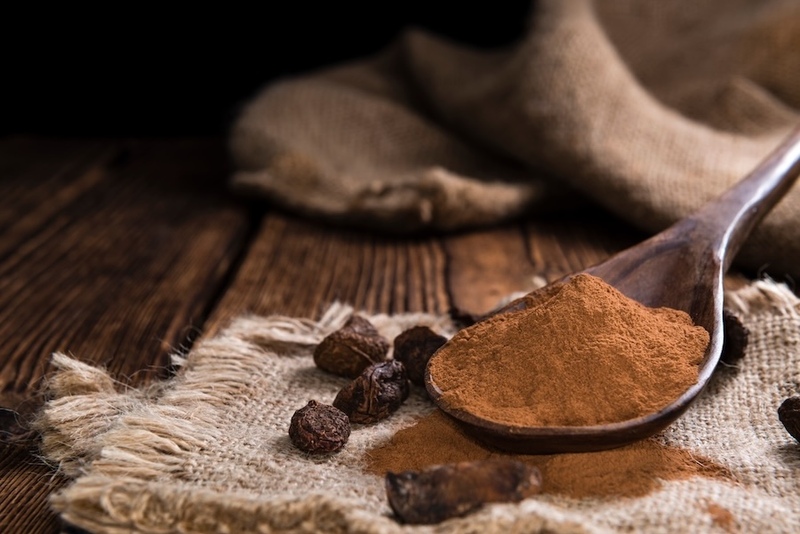 Kola nuts are primarily used in sodas, the most well-known being Coca-Cola. There’s an interesting history behind Coca-Cola because it was originally made with coca leaves and kola nuts. For those of you who don’t know, coca leaves are the source of the drug cocaine, a sympathetic nervous stimulant.
The original formula was created by a pharmacist named John Pemberton in 1886 as a patent medicine. He sold it as a cure for morphine addiction, a remedy for hangovers, and an aid to relieve hiccups. The remedy was also touted as a brain tonic and a remedy for headaches, exhaustion, and impotence.
Both the original and current formulas for Coca-Cola is a closely guarded secret, but there are sources that suggest the original formula was flavored with citric acid (which is also a preservative) and the essential oils of orange, cinnamon, lemon, coriander, nutmeg, and neroli.
While modern colas don’t contain any cocaine, they do retain the kola nuts, which contain both caffeine and theobromine. Theobromine, which is found in chocolate as well, has a stimulant activity like caffeine, but it’s a less jolting and more sustained energy boast.
Besides being a stimulant, kola nuts have antibacterial action, diuretic effects, dilate the bronchial passages, and help to break up mucus. Their bitter flavor can also act as a digestive stimulant, an effect which is negated in the highly sweet cola drinks. I have found Coca-Cola helpful in digesting heavy foods, such as a hamburger and fries, but I think that is probably not due to the kola nuts, but rather the essential oils that would act as digestive stimulants.
Guarana (Paullinia cupana)
 Guarana comes from Brazil and has a much higher concentration of caffeine than coffee. There are now many beverages that use it instead of kola nuts, but it’s not any healthier than coffee or kola nuts. Besides caffeine, it contains theobromine and another alkaloid that acts on adenosine receptors, theophylline. It also contains some tannins and has antioxidant properties similar to green tea. It has been used to treat digestive problems like chronic diarrhea and constipation, and helps to dilate the bronchial passages.
Because guarana has such a high caffeine content, it needs to be used in more moderate amounts. Too much will overstimulate the nervous system, causing the typical problems associated with the overconsumption of caffeine, such as insomnia, anxiety, increased blood pressure, and nervousness.
Yerba Mate (Ilex paraguariensis)
 Of all the caffeinated herbs we’ve discussed the two that I would consider the healthiest are green tea and yerba mate. Yerba mate contains less caffeine than coffee and has a higher antioxidant value than green tea.
It is consumed as a social beverage in many South American countries such as Paraguay, Argentina, Southern Brazil, Uruguay, and Southern Chile. It was traditionally served in a container made from a gourd. The flavor is similar to green tea, with a grassy flavor that can become bitter in hot infusions. I’ve tried beverages made with yerba mate, and I personally don’t care for the flavor, but you can mix it with other herbs to improve the taste.
The good thing about yerba mate is that it promotes mental alertness, but doesn’t overstimulate you and create the jittery feeling that coffee, guarana, and kola nuts do. It has some antimicrobial properties, helps to lower blood sugar, and may help with weight loss.
This article concludes our look at popular herbs that contain caffeine. Like all of our herbal remedies, they play an important role in herbalism when used sensibly. I wish that other herbal remedies could be used as commonly and freely as people use these stimulating nervines.
Steven's Articles
-

-
Cruciferous Vegetables
The Health Benefits of Broccoli, Cauliflower,…
April
-

-
Kale Chips
A fun way to eat your leafy, green vegetables
-

-
Ligustrum (Glossy Privet Fruits)
Ligustrum is a liver and kidney tonic that strengthens…
-

-
Bupleurum
An important Chinese herb for supporting the liver…
March
-

-
N-Acetylcysteine
An amino acid-based supplement for liver, eye,…
-

-
The Effects of Tryptophan on Health and Mood
L-Tryptophan and 5-HTP are important precursors…
-

-
The Exotic Scent of Ylang Ylang
Promoting sensual feelings, relaxing the nerves,…
-

-
The Uplifting Fragrance of Jasmine
Jasmine lifts depression, aids self-confidence,…
February
-

-
Reishi (Ganoderma) Mushroom
A TCM remedy for calming the shen (spirit), balancing…
-

-
Eucommia Bark
A superior tonic that promotes kidney, structural,…
January
-

-
Goldenthread, Phellodendron, and Yellow Root
Three herbal remedies containing the infection-fighting…
-

-
Teasel
A traditional herb for healing bones and joints…
-

-
Barberry and Healthy Personal Boundaries
A thorny shrub for fighting infections and supporting…
December
-

-
The Evidence for Berberine
A yellow alkaloid found in traditional infection-fighting…
-

-
The Sensible Use of Caffeinated Herbs
Kola nuts, guarana, and yerba mate and other herbs…
Steven Horne is an herbalist and healer who focuses on teaching others how they can start building health and stop treating disease.
-
-
Cruciferous Vegetables
The Health Benefits of Broccoli, Cauliflower, Kale,… | May 6, 2026
-
-
-
Kale Chips
A fun way to eat your leafy, green vegetables | April 30, 2026
-
-
-
Ligustrum (Glossy Privet Fruits)
Ligustrum is a liver and kidney tonic that strengthens… | April 28, 2026
-
-
-
Bupleurum
An important Chinese herb for supporting the liver… | April 6, 2026
-
-
-
N-Acetylcysteine
An amino acid-based supplement for liver, eye, lung,… | March 31, 2026
-
- More Articles
- Botany for HerbalistsMay 2026Member class
- Using Foods as MedicinesMay 26, 2026 6:00 pm MTMember webinar
- The Medicinal Kit in Your Kitchen CabinetJune 30, 2026 6:00 pm MTMember webinar
- Herbs & HomeopathyJuly 28, 2026 6:00 pm MTMember webinar
- The Amazing Benefits of AdaptogensAugust 25, 2026 6:00 pm MTMember webinar
- More Webinars & Classes
Useful Links
Contact Us
Email: treelite@treelite.com
Steven Horne Creations
PO Box 1172
St. George, UT 84771
2026 © Steven Horne Creations, LLC. All Rights Reserved.